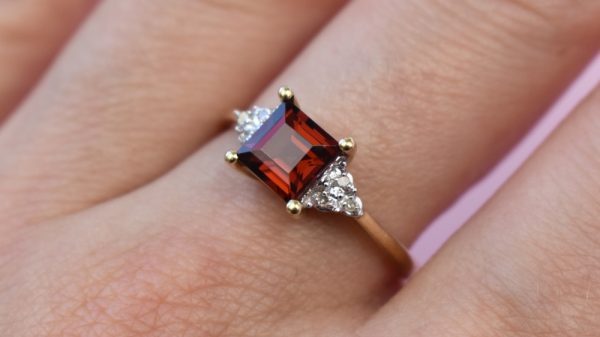
What Really Matters Most in a Diamond: Cut, Color, Clarity, or Carat?

Understanding the 4Cs: How to Choose the Right Diamond for Your Budget

When shopping for a diamond, one of the first things you’ll hear about is the “Four Cs”: cut, color, clarity, and carat weight.

Many buyers assume that bigger is always better, while others focus on finding the highest color or clarity grade available. The reality is that every diamond is a balance of these characteristics, and understanding how they work together can help you make a smarter purchase.

At Leo Hamel Fine Jewelers, one of the most common questions we hear is:

“Which of the 4Cs is most important?”

The answer depends on your priorities, but understanding what each characteristic contributes to a diamond’s appearance can help you decide where your budget is best spent.””
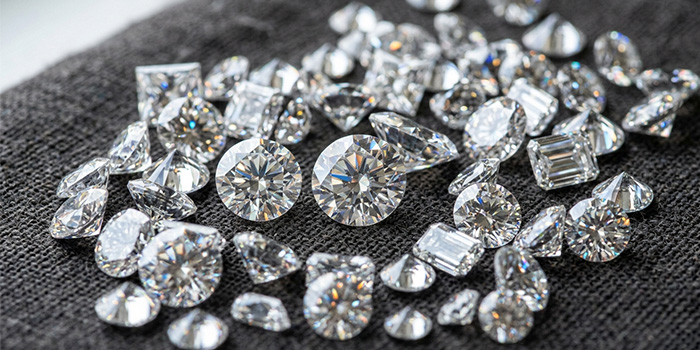
a close-up image of a loose diamonds from various angles

What Are the Four Cs?

The 4Cs were developed by the Gemological Institute of America as a standardized way to evaluate diamond quality.

They include:

Each plays a role in a diamond’s beauty, rarity, and value.
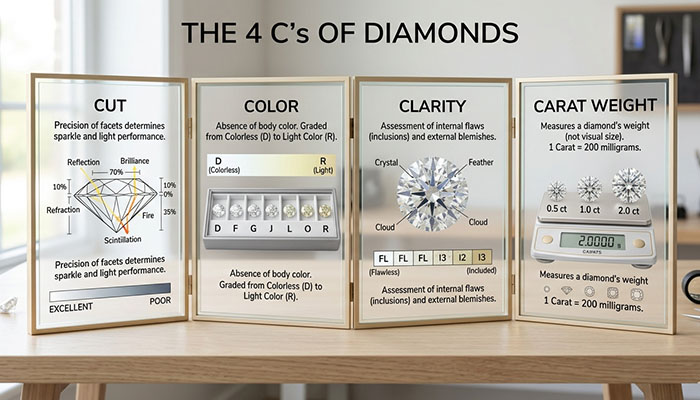
a graphic chart that explains the 4Cs of Diamonds and Lab-grown Diamonds

Cut: The Most Important Factor for Sparkle

If you can only choose one characteristic to prioritize, it may be cut.

Cut refers to how well a diamond’s facets interact with light. A well-cut diamond reflects light back to the viewer, creating brilliance, fire, and sparkle.

Even a diamond with excellent color and clarity can appear dull if it is poorly cut.

A well-cut diamond often:

For most buyers, cut has the greatest impact on what they actually see when looking at a diamond.

Color: How White Does Your Diamond Need to Be?

Diamond color measures the absence of color in a white diamond.

The grading scale ranges from D (colorless) to Z (noticeable yellow or brown tint).

Many buyers are surprised to learn that the difference between adjacent color grades is often difficult to detect without side-by-side comparison.

In many cases:

For shoppers looking to maximize value, slightly lower color grades can often free up budget for a larger diamond or a better cut.

Clarity: Important, But Often Overemphasized

Clarity measures the presence of internal characteristics (inclusions) and external characteristics (blemishes). These are non-transparent areas inside the diamond through which light does not pass. They were formed during the diamond’s creation and usually don’t impact the strength of the stone.

Many first-time buyers assume they need an extremely high clarity grade.

In reality, most inclusions in diamonds graded SI2 and above are invisible to the naked eye.

At Leo Hamel Fine Jewelers, we often help customers identify diamonds that are “eye-clean,” meaning imperfections cannot be seen without magnification.

Rather than paying a significant premium for a near-flawless diamond, many buyers choose a slightly lower clarity grade that looks identical during everyday wear.
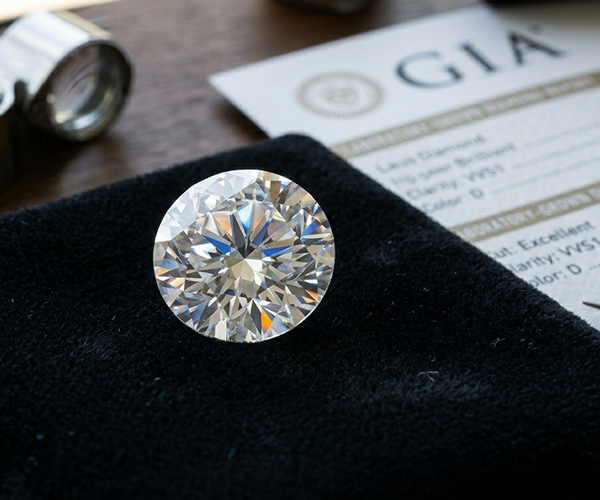
Carat Weight: Bigger Isn't Always Better

Carat refers to a diamond’s weight, not its visual size, although its apparent size is very much related to its carat weight.

While larger diamonds are rarer and typically more expensive, increasing carat weight can dramatically increase price.

For example:

Many buyers discover that a slightly smaller diamond with excellent cut appears more impressive than a larger diamond with poorer proportions.

So Which Diamond Characteristic Matters Most?

For most buyers, a practical ranking looks like this:

1. Cut

The characteristic that has the greatest impact on beauty and sparkle.

2. Carat Weight

The characteristic most people notice first because it affects overall size.

3. Color

Important, but often flexible depending on setting and personal preference.

4. Clarity

Important to a point, but many buyers can save money by selecting an eye-clean diamond rather than pursuing extremely high clarity grades.
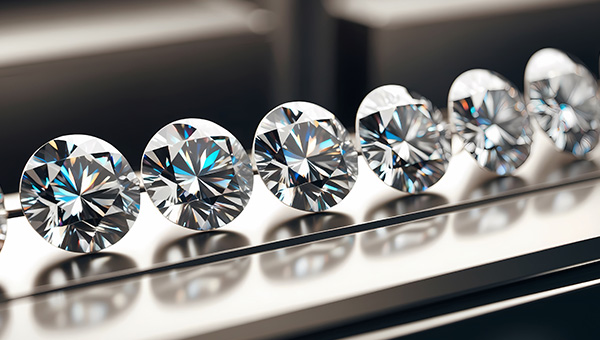
a image of a bunch of diamonds in a row on a table

How Lab-Grown and Natural Diamonds Compare

The 4Cs apply to both natural and lab-grown diamonds.

Whether a diamond was formed in the earth or grown in a laboratory, it is graded using the same standards for cut, color, clarity, and carat weight.

This allows buyers to compare natural and lab-grown diamonds using the same criteria while deciding which option best fits their goals and budget.

Why Seeing Diamonds in Person Matters

Online listings can provide specifications, but they don’t always tell the whole story.

Two diamonds with similar grades may look very different when viewed side by side.

At Leo Hamel Fine Jewelers, we help customers compare diamonds in person, explaining how cut, color, clarity, and carat weight affect appearance and value so they can make an informed decision.

The goal isn’t to sell the highest-grade diamond—it’s to help customers find the diamond that offers the best combination of beauty, quality, and value for their budget.

Frequently Asked Questions

1. Which of the 4Cs is most important?

For most buyers, cut is the most important because it has the greatest impact on sparkle and overall appearance.

2. Is a bigger diamond always better?

Not necessarily. A well-cut diamond can often look more impressive than a larger diamond with poorer proportions.

3. What is a good clarity grade for most buyers?

SI2 to VS2 diamonds often provide excellent value because they are eye-clean but cost less than higher clarity diamonds.

4. What color diamond offers the best value?

Many buyers find G-H color diamonds provide an excellent balance between appearance and cost.

5. Does the 4Cs system apply to lab-grown diamonds?

Yes. Lab-grown diamonds are graded using the same 4Cs as natural diamonds.

6. Can a diamond look bigger than its carat weight?

Yes. A well-cut diamond can appear larger because of how it reflects light.

7. Is flawless clarity worth the extra cost?

For many buyers, no. The visual difference is often impossible to see without magnification.

8. What is the difference between diamond cut and shape?

Shape refers to the outline (round, oval, emerald, etc.), while cut refers to how well the diamond interacts with light.

9. Should I prioritize cut over carat weight?

In many cases, yes. Better cut quality typically produces more sparkle and visual impact.

10. How can I compare diamonds effectively?

Viewing diamonds side by side with guidance from a knowledgeable jeweler like Leo Hamel Fine Jewelers is often the best way to understand their differences.
May Birthstone Guide: Emerald Meaning, Quality, Value, and Buying Tips

What Is May’s Birthstone?

The official birthstone for May is the emerald, one of the most recognizable and historically significant gemstones in the world. Known for its vivid green color and exceptional rarity, emerald belongs to the beryl mineral family and has been prized for thousands of years by royalty, collectors, and jewelry lovers alike.

Emerald is considered one of the “Big Four” precious gemstones, alongside diamond, ruby, and sapphire. Its longstanding popularity comes from a combination of beauty, symbolism, rarity, and the unique depth of color that few other gemstones can match.

For those born in May, emerald represents renewal, vitality, and growth, making it a meaningful choice for birthstone jewelry.

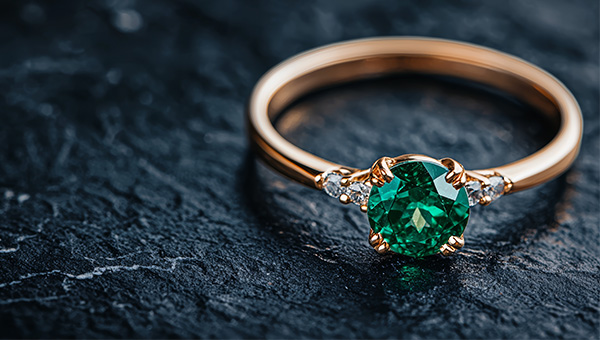
a close up image of an emerald ring on a rock textured table

Why Is Emerald the Birthstone for May?

Emerald has been associated with the month of May for centuries because of its connection to spring, renewal, and flourishing life. Its deep green color naturally reflects the season’s themes of growth and transformation.

Ancient civilizations believed emerald possessed protective and healing qualities. The ancient Egyptians, including Cleopatra, famously prized emeralds and associated them with eternal youth and rebirth. In Roman culture, emerald was connected to Venus, the goddess of love and beauty.

These historical associations eventually helped establish emerald as May’s official birthstone, symbolizing harmony, wisdom, hope, and emotional balance.

What Gives Emerald Its Green Color?

Emerald’s signature green color comes from trace amounts of chromium and vanadium present during the gemstone’s formation.

What makes emerald especially fascinating is that slight variations in these trace elements can create noticeably different shades of green. Some emeralds display bluish-green undertones, while others appear more purely green.

The most valuable emeralds exhibit a vivid, saturated green with strong color consistency throughout the stone. If the color becomes too pale, the stone may be classified simply as green beryl rather than emerald. If it becomes too dark, it can lose the brilliance and transparency that make emerald so desirable.

Color is the single most important factor when evaluating emerald quality.

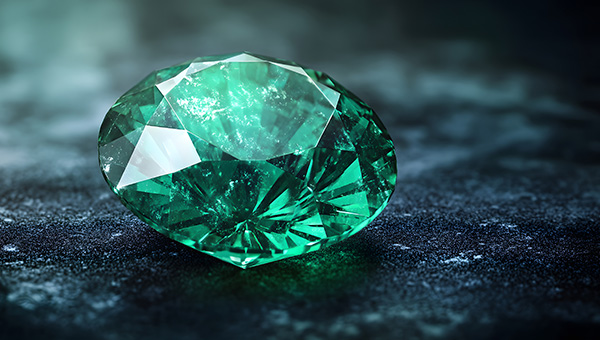
a close up image of an emerald

How Emerald Quality Is Evaluated

Unlike diamonds, which are heavily graded for clarity and brilliance, emeralds are judged primarily by their color.

The finest emeralds display rich saturation, balanced tone, and even color distribution. Clarity is still important, but emerald buyers should understand that inclusions are expected and often accepted as part of the gemstone’s natural identity.

These inclusions are commonly referred to as “jardin,” the French word for garden, because they often resemble moss-like or branch-like internal patterns.

A completely flawless emerald is exceptionally rare. In fact, if an emerald appears perfectly clean, it often warrants closer inspection, as this can indicate synthetic origin or extensive treatment.

Cut also plays a significant role in emerald quality. Emeralds are frequently shaped into the classic emerald cut because its rectangular facets protect the stone from unnecessary pressure while maximizing color visibility.

Carat weight matters as well, but larger emeralds increase dramatically in value only when they retain excellent color and reasonable clarity.

Are Emeralds Durable Enough for Everyday Wear?

This is one of the most common questions buyers ask, and the answer requires some nuance.

Emeralds rank between 7.5 and 8 on the Mohs hardness scale, which means they are relatively resistant to scratching. However, hardness only measures scratch resistance—not overall toughness.

Emeralds naturally contain inclusions, and those internal characteristics can make them more vulnerable to chipping or cracking under impact.

This means emerald jewelry can absolutely be worn regularly, but it requires thoughtful handling.

An emerald ring worn every day should ideally feature a protective setting that shields the edges of the stone. Lower-profile settings are generally safer than elevated designs that expose corners and edges.

For buyers seeking low-maintenance jewelry for constant wear, emerald pendants and earrings are often safer long-term choices than rings.

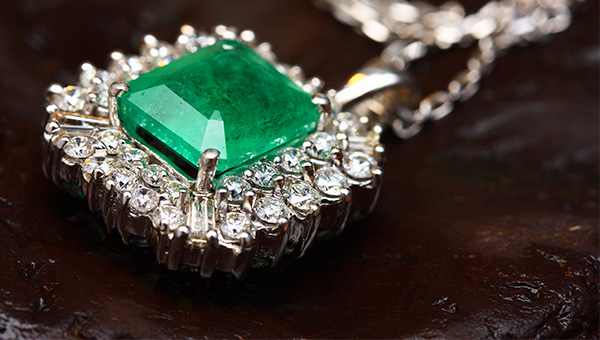
a close up image of an emerald and diamond necklace

Why Are Most Emeralds Treated?

One of the most important things buyers should know is that most natural emeralds undergo treatment.

The most common enhancement involves filling surface-reaching fractures with oils or resins to improve clarity and appearance. This is considered standard practice in the gemstone industry.

Treatment does not make an emerald fake, but it does affect care requirements.

Because these enhancements can degrade over time, emeralds should not be exposed to ultrasonic cleaners, steam cleaning, or harsh chemicals.

A reputable jeweler should always disclose any treatments and explain what they mean for long-term maintenance.

Where Do the Best Emeralds Come From?

Emerald origin can influence both value and appearance.

Colombian emeralds are widely regarded as the most desirable due to their exceptional color and transparency. Their vivid green tone often serves as the benchmark for premium emerald quality.

Zambian emeralds are also highly respected and tend to display slightly darker, bluish-green hues with excellent clarity.

Brazilian emeralds are generally more abundant and often appear lighter in color, making them a popular option for buyers seeking value.

While origin matters, the individual quality of the stone is often more important than where it was mined.

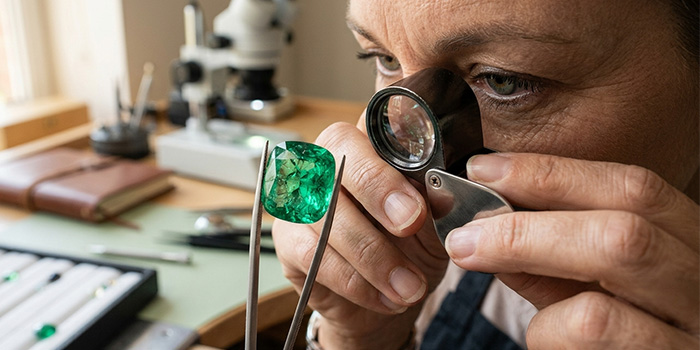
a close-up image of a gemologist using reverse tweezers and a loupe to inspect a emerald

Emerald vs Diamond: Which Is Better?

Emerald and diamond serve very different purposes in fine jewelry.

Emerald is chosen for color, individuality, symbolism, and rarity. It offers a distinctive aesthetic that stands apart from traditional white gemstones. Diamond is prized for durability, brilliance, and versatility. It is significantly harder and better suited for daily wear without concern.

For buyers who value emotional meaning and vibrant color, emerald is often the more compelling choice. For those prioritizing practicality and resilience, diamond may be the better fit.

Many of the most beautiful jewelry designs combine emeralds with diamonds, balancing color with brilliance and adding structural protection to the emerald.

How Should Emerald Jewelry Be Cared For?

Emerald jewelry requires more careful maintenance than many other gemstones.

Cleaning should always be done gently using warm water, mild soap, and a soft cloth or brush. Professional inspections are important to ensure the setting remains secure and to monitor the condition of any clarity enhancements.

Emerald jewelry should be stored separately from harder gemstones like diamonds to prevent scratching. It should also be removed before exercise, swimming, cleaning, or any activity that risks impact or chemical exposure.

With proper care, emerald jewelry can remain beautiful for generations.

Is Emerald a Good Gift for a May Birthday?

Emerald is one of the most meaningful birthstone gifts available.

Its connection to renewal, growth, wisdom, and love gives it emotional significance beyond its beauty. An emerald gift can feel highly personal, especially when selected thoughtfully based on the wearer’s lifestyle.

For someone who appreciates color, rarity, and symbolism, emerald is an exceptional choice. When chosen with care and properly maintained, emerald jewelry often becomes a treasured heirloom.

Why Emerald Stands Out Among Birthstones

Emerald remains one of the most iconic and historically significant gemstones in fine jewelry. Its status as May’s birthstone is rooted in centuries of symbolism tied to renewal, abundance, and vitality.

What makes emerald especially appealing is the combination of rarity, unmistakable color, and cultural significance. While it may require more care than harder gemstones, many buyers feel its beauty and meaning more than justify the additional maintenance.

For those celebrating a May birthday or searching for a meaningful gemstone gift, emerald remains a deeply symbolic choice.

Frequently Asked Questions

What is the birthstone for May?

The official birthstone for May is emerald, a green gemstone from the beryl family known for its rich color and historical significance.

Why is emerald the birthstone for May?

Emerald is associated with May because its green color symbolizes spring, renewal, and growth. Historically, it has also been linked to love, fertility, and prosperity, which align with the themes of the season.

What does the emerald birthstone symbolize?

Emerald is commonly associated with renewal, emotional balance, love, loyalty, and prosperity. It has also been historically believed to promote clarity, insight, and harmony.

Are emeralds more valuable than diamonds?

High-quality emeralds can be more valuable per carat than diamonds, especially when they display strong color and good transparency. However, diamonds are generally more consistent in pricing due to standardized grading.

Are emeralds durable enough for everyday wear?

Emeralds can be worn regularly, but they require more care than diamonds. While they are relatively hard, they are more prone to chipping due to natural inclusions, so protective settings and mindful wear are recommended.

Why do emeralds have inclusions?

Emeralds naturally form with internal inclusions, often called “jardin.” These are considered normal and help distinguish natural emeralds from synthetic or imitation stones.

Are most emeralds treated or enhanced?

Yes, most emeralds are treated with oils or resins to improve clarity. This is a standard and accepted practice in the gemstone industry, but it should always be disclosed at the time of purchase.

What is the best color for an emerald?

The most valuable emeralds display a vivid, saturated green with even color distribution. Stones that are too light or too dark are generally considered less desirable.

Where do the highest quality emeralds come from?

Colombia is known for producing some of the finest emeralds, though high-quality stones are also found in Zambia and Brazil. Origin can influence value, but color and clarity are often more important factors.

What types of emerald jewelry are best for daily wear?

Emerald pendants and earrings are typically better suited for frequent wear because they are less exposed to impact. Rings can be worn daily if they are set in protective designs and handled with care.

How should you clean and care for emerald jewelry?

Emerald jewelry should be cleaned with mild soap, warm water, and a soft cloth. Ultrasonic and steam cleaners should be avoided, as they can damage the stone or remove clarity treatments.

Where can I buy emerald jewelry in San Diego?

You can purchase emerald jewelry from reputable local jewelers like Leo Hamel Fine Jewelers, where you can view pieces in person, receive expert guidance, and access ongoing maintenance services.

The History Behind Popular Gemstones: A San Diego Jewelry Guide

Jewelry has always held a special place in human history, not just for its beauty but for the stories, symbolism, and traditions it carries. Each gemstone has a unique history that adds depth and meaning to the piece you wear. At Leo Hamel Fine Jewelers, we believe that understanding a gemstone’s past makes your jewelry purchase even more meaningful. Whether you’re looking to buy gemstones in San Diego or select the perfect engagement ring, knowing the history behind each gem can guide your choice.

Diamond

Diamonds have fascinated humans for thousands of years, first discovered in India over 3,000 years ago. Ancient cultures believed diamonds held protective powers, symbolizing courage, strength, and invincibility. They were worn by warriors heading into battle and later prized by European royalty as symbols of status and wealth. Their enduring brilliance and hardness made them a symbol of eternal love, which is why they became the preferred choice for wedding rings. Today, those exploring diamonds in San Diego can appreciate how Leo Hamel’s selection highlights both the unique brilliance and rich history of each stone.

a close-up image of a loose diamonds from various angles

Sapphire

Sapphires, best known for their deep blue color, have been treasured since ancient Greece and Rome for their protective powers. They were often associated with wisdom, loyalty, and divine favor, and worn by clergy and royalty as a sign of justice and spiritual protection. Today, sapphires remain a symbol of devotion and virtue, often chosen for engagement rings that stand out with their vibrant color and meaning. At Leo Hamel’s, sapphire rings, necklaces, and custom pieces celebrate both the gemstone’s beauty and its storied past.

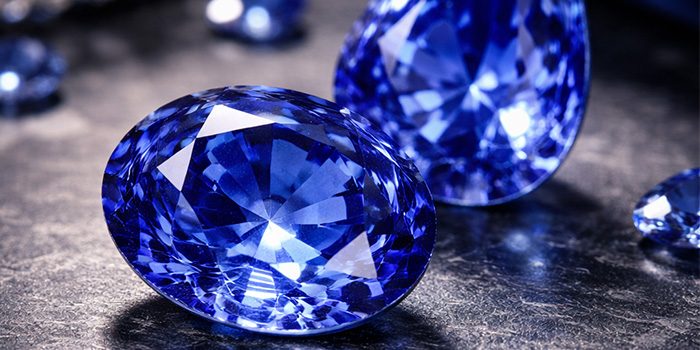
a close-up image of sapphires on a table

Ruby

Rubies, called Ratnaraj or “king of precious stones” in ancient India, have long been prized for their fiery red hue and symbolism of passion, vitality, and protection. Across Asia and Europe, rubies were used in crowns, ceremonial jewelry, and talismans, especially by royalty and warriors. Their deep red color has made them a popular choice for wedding rings that carry both meaning and striking beauty. Leo Hamel’s collection includes rubies that honor this rich heritage while reflecting modern craftsmanship.

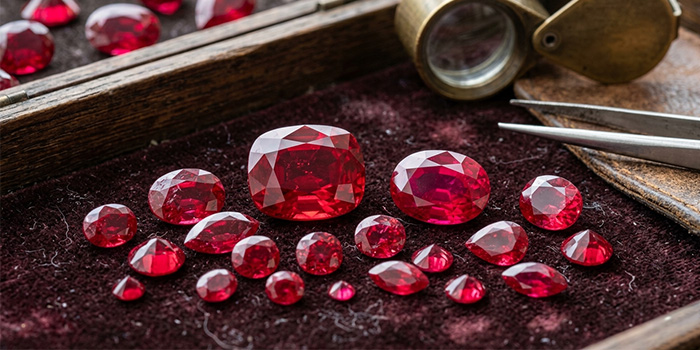
a close-up image of different rubies on a table in various shapes and sizes

Emerald

Emeralds, with their rich green color, have symbolized rebirth, fertility, and prosperity for centuries. Cleopatra famously adorned herself with emeralds, while the Incas and Aztecs held them sacred, connecting them to spiritual energy and nature. During the Renaissance, emeralds were highly sought after by European nobility. Today, emeralds continue to be a meaningful choice for engagement rings or other fine jewelry, combining historical significance with visual elegance. Leo Hamel’s offers ethically sourced emeralds crafted into timeless pieces that reflect this heritage.

a close-up image of a gemologist using reverse tweezers and a loupe to inspect a emerald

Amethyst

Amethyst, prized for its striking purple color, has long been associated with clarity of mind, spirituality, and protection. Ancient Egyptians and Greeks believed it could prevent intoxication, while medieval Europe used it in religious jewelry to symbolize piety and wisdom. Today, amethyst is popular for birthstone jewelry, rings, and meaningful gifts, and it is occasionally featured in unique wedding rings that stand out for both color and symbolism. At Leo Hamel’s, their amethyst pieces reflect both the gemstone’s natural beauty and centuries of cultural history.

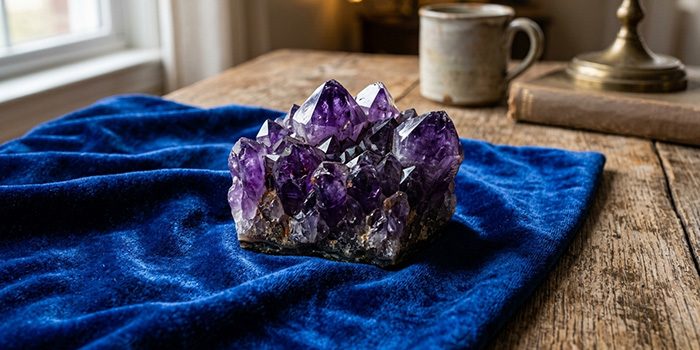
a close-up image of an uncut amethyst on a velvet cloth on a table

Pearl

Pearls are unique among gemstones because they are formed organically inside living oysters, rather than being mined. Their natural formation and soft, iridescent sheen have made them prized for thousands of years. In ancient China, pearls symbolized wisdom and purity, while in Egypt and Rome they were treasured by royalty as signs of wealth and status. Pearls were also believed to hold protective and calming properties, often passed down as family heirlooms.

While pearls are not commonly used as the main stone in engagement rings due to their delicate nature, they are sometimes featured in wedding rings, accent stones, or vintage-inspired designs for a unique, timeless touch. At Leo Hamel’s, pearls are showcased in necklaces, earrings, and bridal jewelry that combine historical elegance with modern San Diego style, allowing customers to enjoy both the beauty and centuries of tradition these gemstones carry.

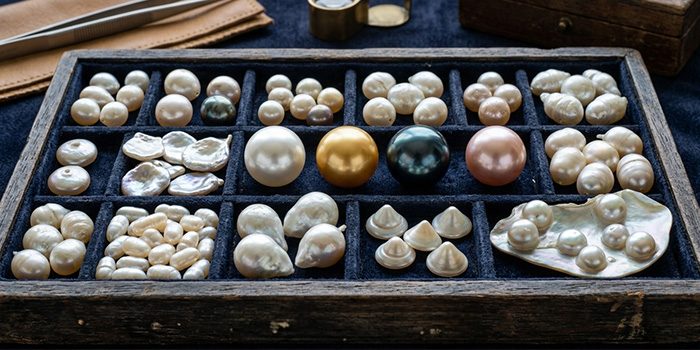
a close-up image of a jeweler's box filled with different types of pearls. This picture illustrates that pearls come in various shapes, sizes, and colors

Why Gemstone History Matters

Choosing jewelry is about more than picking a beautiful piece, it’s about selecting something meaningful. Understanding the history and symbolism behind gemstones helps you make a thoughtful jewelry purchase in San Diego. At Leo Hamel’s, every gemstone comes with a story, whether it’s a diamond engagement ring, a sapphire necklace, or a custom creation. Exploring these stories can make your jewelry purchase feel even more personal and special.

Frequently Asked Questions (FAQ)

Q: What gemstones are popular for engagement rings?
A: Diamonds remain the top choice, but sapphires, emeralds, and rubies are also popular for their symbolism and unique colors in engagement rings and wedding rings.

Q: How do I choose the right gemstone for me or a gift?
A: Consider the recipient’s style, the gemstone’s meaning, and your budget. Visiting a local jewelry store in San Diego lets you see stones in person and get expert advice.

Q: Where can I buy authentic gemstones in San Diego?
A: You can find certified, high-quality gemstones at trusted local jewelers like Leo Hamel Fine Jewelers, offering both lab-grown and natural earth-mined diamonds, sapphires, rubies, emeralds, and more.

Q: Are lab-grown gemstones a good option?
A: Yes! Lab-grown gemstones have the same chemical composition as natural earth-mined stones and are a more sustainable and budget-friendly choice, often available in engagement rings and fine jewelry.

Q: How do I care for my gemstones?
A: Each gemstone requires specific care. Diamonds and sapphires are very durable, while emeralds and pearls need gentle handling. Regular cleaning and professional check-ups help maintain their beauty.

Glistening Jewels of December: Tanzanite, Turquoise, and Blue Zircon

As December rolls in, it brings a trio of dazzling birthstones—Tanzanite, Turquoise, and Blue Zircon—each with its own unique charm, color, and story. Whether you’re celebrating a December birthday or just love adding a splash of cool blues to your jewelry collection, these gems have something special to offer. Let’s take a closer look!

Tanzanite

Tanzanite is all about that mesmerizing violet-blue color, which seems to shift depending on the angle—thank pleochroism for that magic! Its shades can range from soft lavender to deep royal blue, making it a favorite for statement pieces. On the Mohs scale, Tanzanite scores between 6 and 7, so while it’s not the toughest stone out there, it’s perfect for special-occasion jewelry.

What makes Tanzanite truly extraordinary? It’s found in just one place on Earth—the Merelani Hills near Mount Kilimanjaro in Tanzania. This rare gem was only discovered in 1967 and quickly became a sensation, thanks to Tiffany & Co. The vivid blue-violet hues come from the presence of vanadium, and top-quality Tanzanites can range from $200 to $800 per carat, with exceptional stones fetching even higher prices. A single-source gem this stunning? Definitely worth the hype.

Turquoise

If you love an earthy yet vibrant vibe, Turquoise might just be your gem. Its signature robin’s egg blue (sometimes with a hint of green) has been adored for centuries. Often, you’ll see it with beautiful “matrix” veins running through it, adding character to the stone.

Turquoise has been mined for thousands of years, particularly in arid regions like the United States (Arizona, Nevada, New Mexico), Iran (famous for Persian turquoise), China, and even Egypt. It’s a bit more delicate, with a 5 to 6 hardness rating, so it’s ideal for pieces you’ll wear with care.

Prices can vary quite a bit depending on color, lack of veining, and origin, with high-grade stones ranging anywhere from $10 to $500 per carat. Persian turquoise, with its pure blue color, tends to command the highest value.

Blue Zircon

If sparkle is your thing, Blue Zircon might just steal the show. Known for its brilliant shine and rich blue hues, it’s often mistaken for a diamond thanks to its high refractive index. Zircon isn’t just beautiful—it’s one of the oldest natural minerals on Earth.

Blue Zircon is typically heat-treated to achieve its vibrant color, and it rates between 6 and 7.5 on the Mohs scale, making it a durable choice for most jewelry. Some of the best Blue Zircons come from Cambodia, particularly the Ratanakiri province, as well as Sri Lanka and Myanmar.

Pricing depends on size, color intensity, and clarity, with stones ranging from $50 to $400 per carat. Exceptional pieces can fetch even more, especially for that jaw-dropping brilliance.

Which December Gem Speaks to You?

Whether you’re captivated by the exotic rarity of Tanzanite, the timeless appeal of Turquoise, or the sparkling brilliance of Blue Zircon, December’s birthstones offer something for everyone. These gems make thoughtful gifts or a perfect addition to your own jewelry box.

Stop by Leo Hamel Fine Jewelers to see these beautiful stones up close. From silver to gold settings, we’ve got plenty of options to help you find your next treasured piece. If you have any tanzanite, turquoise, or blue zircon jewelry that you would like to have authenticated and appraised, please reach out to the San Diego Gem Lab for expert service.

Did You Know Each Anniversary Has a Special Gemstone?

An anniversary is a joyous occasion, a time to honor and celebrate the love that you and your spouse share. Whether you’ve been married for years, or are just beginning your journey as newlyweds, there’s no better way to mark your time together than with breathtaking anniversary jewelry. Jewelry is romantic and everlasting, a gift that can be cherished long into the future.

Best of all, each anniversary is traditionally marked by an alluring colored gemstone or precious metal, so shopping for anniversary jewelry is that much easier! If you’re in need of a little inspiration before you shop, we’ve put together a quick list of anniversary jewelry gift ideas that are certain to make your sweetheart swoon.

First Anniversary

The traditional gift for first anniversaries is gold, while the modern alternative is green peridot. Gold is commonly used for jewelry and watchmaking, meaning your options will be plentiful if you decide to go the traditional route. A gold bangle bracelet or gold hoop earrings is a gift that she can wear every day or give him a gold link chain that he may never take off. Set the gemstone peridot into gold jewelry, and you’ve got both anniversary markers in one. This enchanting green gemstone can be found in all types of anniversary jewelry. Surprise her with an elegant pair of peridot stud earrings for a unique gift that she surely won’t expect.

Fifth Anniversary

To mark the 5th wedding anniversary, you can give the gift of sapphire or pink tourmaline. Both richly colored gemstones make a spectacular surprise for the loved one in your life. A pink tourmaline pendant is a vibrant accessory to compliment her favorite outfit. Maybe he’d love a deep, blue sapphire ring that makes him look and feel like royalty. If blue is not their best color, not to worry! Sapphires come in a spectrum of colors like warm, golden yellows and enchanting, rich purples, so there’s something for every taste!

Tenth Anniversary

10th anniversaries are traditionally celebrated with every woman’s favorite gemstone – the diamond! There is a wealth of options to choose from when it comes to diamond anniversary jewelry. Dazzle her with a delicate diamond pendant that she can wear with anything. Or perhaps a vintage diamond ring to symbolize your continued love and commitment to her. One or two diamond stud earrings make an elegant gift that any pierced man is sure to love. No matter what you choose, you can never go wrong with sparkling diamond anniversary jewelry.

Fifteenth Anniversary

Romantic red rubies are the traditional gemstone to mark 15th wedding anniversaries, while alexandrite is the modern alternative. If you’re celebrating 15 years with your sweetheart, these two popular gemstones make a superb gift. She’ll look ravishing in a ruby bracelet, or even a charming ruby brooch. If he’s a sharp dressed man, give him ruby cufflinks. Rubies look great on their own but are exceptionally beautiful when paired with diamonds.

Alexandrite, on the other hand, has unique color changing properties that make it especially attractive in anniversary jewelry. This exotic gemstone is known as the “emerald by day, ruby by night,” appearing to be a greenish blue color in daylight, and a deep red to purple in darker environments. If she loves pieces that are uncommon, she’ll be mesmerized by a piece of alexandrite anniversary jewelry.

Twentieth Anniversary

20 years of marriage is quite an accomplishment, and a wonderful excuse to spoil your loved one. The traditional gemstone for 20th anniversaries is emerald, and the contemporary alternative is yellow diamond. These vibrant, colorful gemstones look beautiful when they’re set in jewelry, and will surely brighten every day. A vintage emerald cocktail ring is an eye-catching statement piece that she’ll love to accessorize with, and his yellow diamond ring will be the envy of his friends. Or give her a special glow in a pair of brilliant yellow diamond earrings. What better way to show them just how much you’ve cherished the last 20 years than with splendid emerald and yellow diamond anniversary jewelry?

Thirtieth Anniversary

The 30th year of marriage is celebrated with pearls and is known as the pearl jubilee. Pearls are classic and timeless, a fitting representation of your love that has endured for so long. An elegant strand of pearls makes a charming gift, one that she’ll wear for many years to come. If she prefers something with a bit of sparkle, opt for a pair of pearl earrings with diamond accents.

Pearls may be traditionally worn by women, but famous men in music and film are now wearing pearls, from chokers to earrings. Pearls come in a variety of colors besides the conventional white. Golden pearls, for example, have a warm, champagne colored glow that looks especially glamorous. She’ll be itching to get dressed up and show off her new pearl anniversary jewelry!

Fiftieth Anniversary

Not many couples can boast that they’ve made it 50 years with their better half. Imagine all the tender moments you’ve undoubtedly shared with someone after so many years living as one. 50 years should be celebrated spectacularly, which is why it’s known as the golden jubilee. For your first gold anniversary, you may not have been able to afford anything extravagant. After half a century together, you’re able to splurge on something truly special for your loved one. A luxurious gold watch always makes a wonderful gift for the man of your life, and a gold diamond bracelet is one perfect gift to completely dazzle your woman.

Anniversary Jewelry in San Diego

Shopping for an upcoming anniversary with your loved one? We can help you to make it an event to remember! Whether it’s your first or your fiftieth, Leo Hamel Fine Jewelers is your go-to San Diego jewelry store for beautiful, one-of-a-kind anniversary jewelry. Our selection of gemstone jewelry is vast, so there’s no shortage of options when choosing the perfect gift!

Where Do Pink Sapphires Come From?

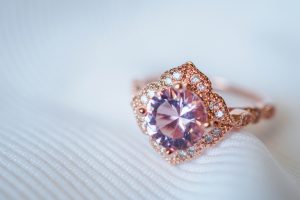
Rose gold filigree engagement ring centered with a pink sapphire.

Did you know that the gemstone sapphire comes in every color of the rainbow except red? (A red sapphire is called a ruby!) Everyone knows and loves serene blue sapphires, but pink sapphires are in a class of their own. Ranging from a soft rose to a vivid fuchsia, pink sapphires are eye-catching gems. Being in the mineral corundum family, the gem rates a 9 out of 10 on the Mohs Hardness Scale. Because pink sapphire is tough and durable, it makes a great choice even for an engagement ring!

The best source for mining the finest pink sapphire is Myanmar, although it can be found as close to home as Montana. Other sources include Sri Lanka, Tanzania, and Australia.

Pink sapphire is said to bring love and allow one to surrender for the greater good. Since all colors of sapphire are accepted as September birthstones, not just the blue ones, pink sapphire makes a unique gift for your September-born loved one.

The Rich Amethyst Birthstone for February

Those born in the month of February are fortunate enough to have the gemstone amethyst as their birthstone. The gemstone amethyst is popular for its vibrant color, rich history, and variety of mystical properties. It is also the gemstone associated with 6th wedding anniversaries. A type of the mineral quartz, amethysts come in shades ranging from deep purple to pale, pastel lavender. If you’re a February baby, or are shopping for one, read on to find out what makes amethyst jewelry so alluring.

Amethyst History

Amethysts have been treasured since the time of the ancient Greeks. In fact, the origin of this purple gemstone’s name is quite intriguing. The name amethyst is derived from the Greek word, “amethystos,” which translated means “remedy against drunkenness.” The Greeks associated this gorgeous purple gemstone with the wine god, Bacchus, because of its grape-like color. They believed that wearing an amethyst could protect you from drunkenness, keeping the wearer clear-headed and quick-witted. Wine goblets were made from or decorated with amethyst to ward off the effects of their indulgence. But the Greeks weren’t the only ones to cherish this glittering gem.

Purple has always been considered a regal color, and because of this, amethysts have been seen in religious and royal jewelry. Buddhists believed amethyst powers helped to enhance meditation and used them to make prayer beads. Throughout the ages, powerful and rich monarchs used amethyst as a symbol of royalty. Amethyst was a personal favorite of Queen Catherine the Great of Russia.

Today, some amethysts even decorate the British Crown Jewels. Until the 19th century, amethyst was considered a precious gemstone alongside diamonds, rubies, sapphires, and emeralds. However, a large deposit of amethyst was found in Brazil, lowering the gemstone’s financial value because of increased supply. Although amethyst is now considered a semi-precious gemstone, the discovery of Brazilian gems has allowed for large amethysts to be used more frequently in jewelry.

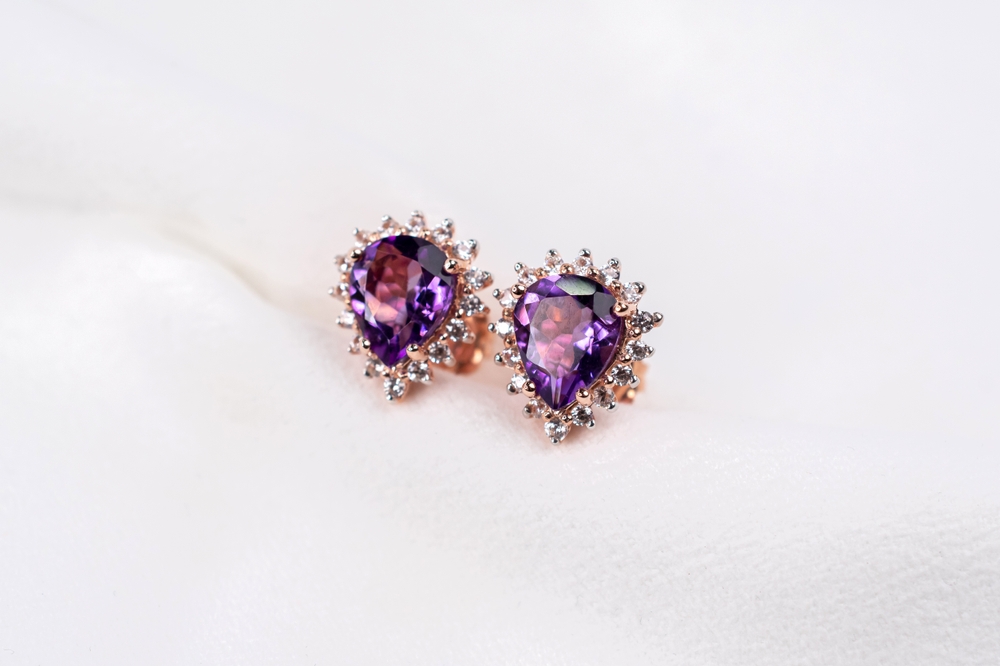
Rose and white gold pear-shaped amethyst and diamond stud earrings.
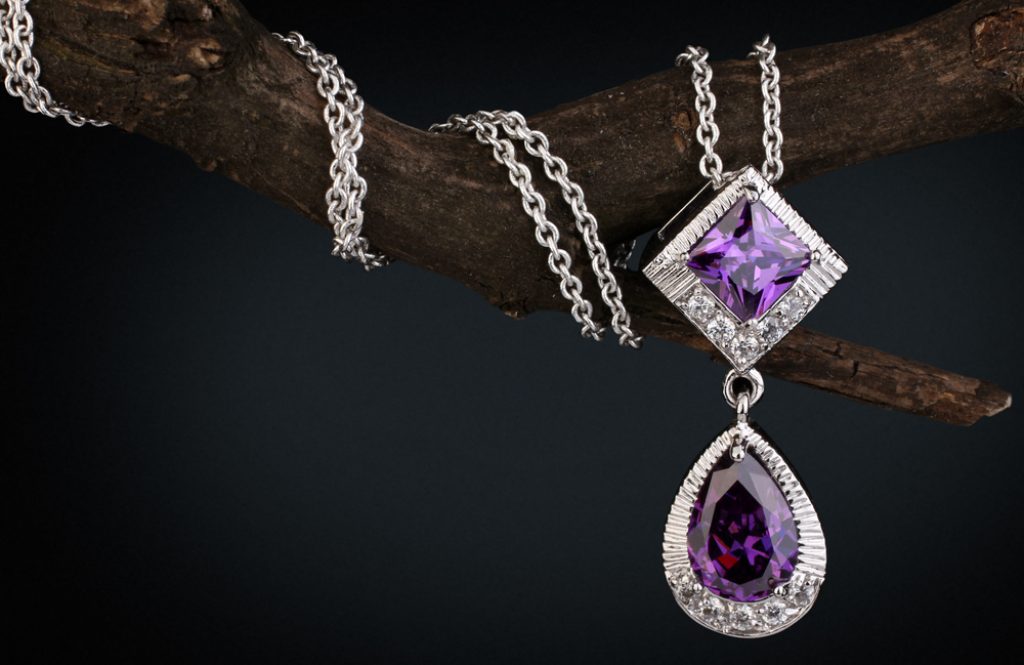
White gold drop necklace set with amethyst wrapped around branch.
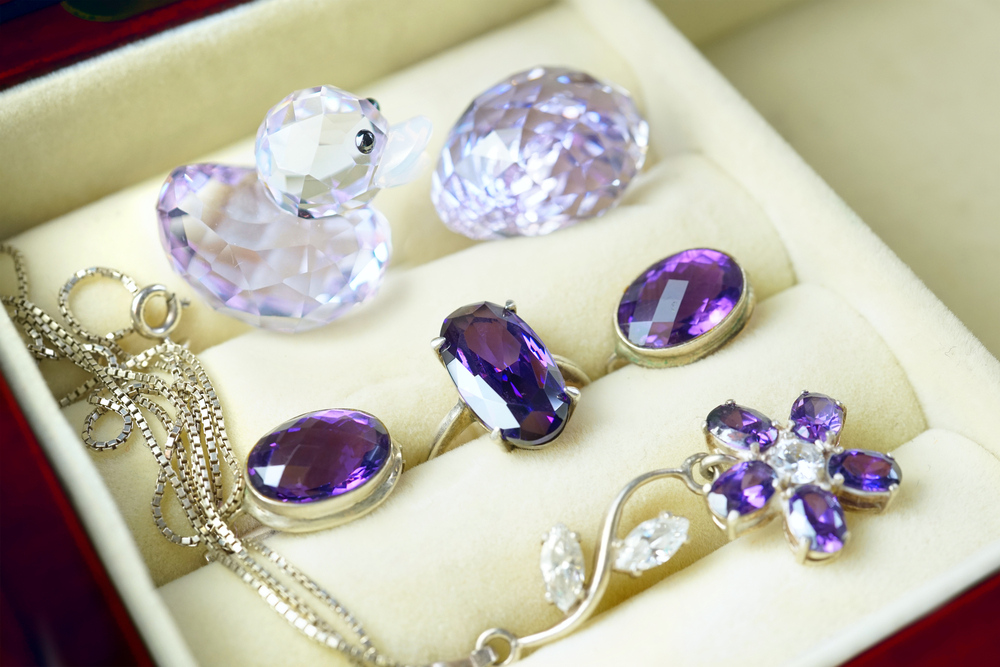
Loose oval cut amethyst in jewelry storage box with whtie gold amethyst rings and necklace.

Mythical Properties

Admirers of amethyst prize the gemstone for its symbolism as well as its beauty. The February birthstone is associated with several different properties including peace, courage, balance, and inner strength. They are also thought to bring wisdom and protection to the wearer. Leonardo da Vinci once wrote that amethysts enhance intelligence and protect against evil thoughts. Due to its history, amethyst is often regarded as the “sobriety stone,” believed to help treat alcoholism and other addictions. Besides being worn as jewelry, amethyst geodes are also popular household and workplace decorations, promoting positive energy and calmness.

Caring for Amethyst Jewelry

Amethyst is relatively easy to care for. It is ranked 7 out of 10 on the Mohs Scale of Hardness, meaning it is a durable gemstone. This makes amethyst jewelry great for everyday wear. Just be careful to avoid prolonged exposure to heat and chemicals as this has the potential to cause the color of your amethyst to fade. Amethyst jewelry can be cleaned with an ultrasonic cleaner or steamer; however, the safest cleaning method is to use a soft brush with warm, soapy water.

Birthstone Jewelry in San Diego

Whether you need the perfect gift for a February-born loved one or a stunning surprise for your 6th wedding anniversary, you’ll find it at Leo Hamel Fine Jewelers. Our radiant collection of amethyst jewelry ranges from delicate stud earrings to mesmerizing amethyst and diamond halo rings, and everything in between! This gorgeous gemstone is sure to make an awe-inspiring gift for anyone in your life, February-born or not!

How Does Gemstone Hardness Vary?

Have you ever wondered why there are so many different diamond engagement rings, but most are set with diamonds? Our customers often ask us whether they can get a specific gemstone set in their engagement ring. There’s nothing stopping you from using an emerald or an amethyst. However, they are not the most recommended gemstones by jewelers for us in an engagement ring.

If you’ve looked for an answer to this question you’ve likely come across something called the Mohs Scale of Hardness. And among the many specs and diagrams, you may have missed how this scale impacts which gemstones are the most suitable for an engagement ring. Fortunately, our experts are here to provide an answer as to why you’ll see mostly sapphire, ruby, or diamond engagement rings, while others like amethyst and aquamarine are less often used for that purpose.

What is the Mohs Scale?

Gemstones exhibit different degrees of “hardness” that range from the more fragile ones like pearls to the harder ones like diamonds. To compare the level of hardness, jewelers refer to the Mohs Scale of Hardness. The scale was first conceived by a German geologist named Friedrich Mohs back in 1812. He referred to it as the “scratchability scale.” The more resistant a gem is to being scratched, the higher its number on the list.

The highest-ranking gemstone on the list is diamond, ranking at number 10. This means that nothing can scratch it – except another diamond. On the other hand, the lowest entry on the list is talc. As you might have guessed, any other mineral on the list is able to scratch it. Similarly, a topaz ranking at a number 8 can scratch a quartz ranked number 7, but not vice versa.

Now, pay close attention to this part. The Mohs scale is an ordinal one, which means that even though the gemstones are linearly listed according to their hardness, the differences between these levels vary widely. For example, the list-topping diamond at number 10 is four times harder than corundum (rubies, sapphires) ranking at number 9. However, corundum is only two times harder than topaz that is ranked number 8. It’s generally recommended that gemstones used in rings that will be worn daily are at least a 7 on the Mohs scale since our hands are more likely to suffer impacts as we go through our busy days.

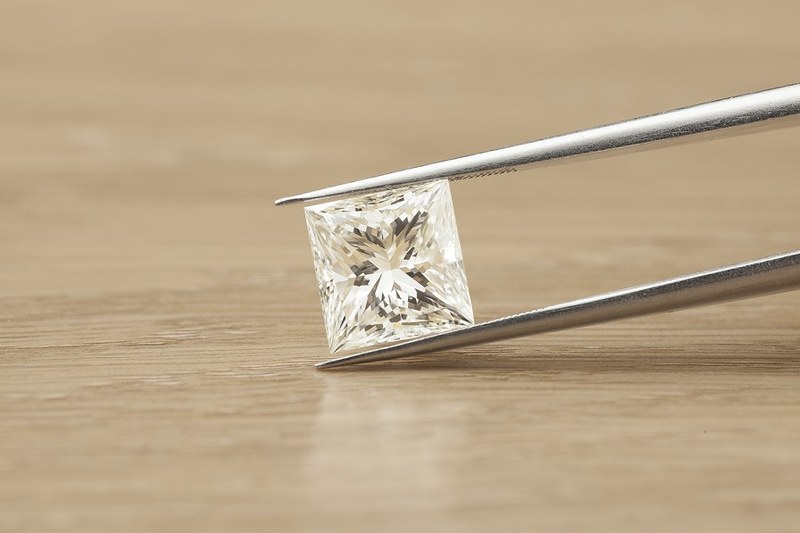
Loose princess cut diamond held by tweezer.
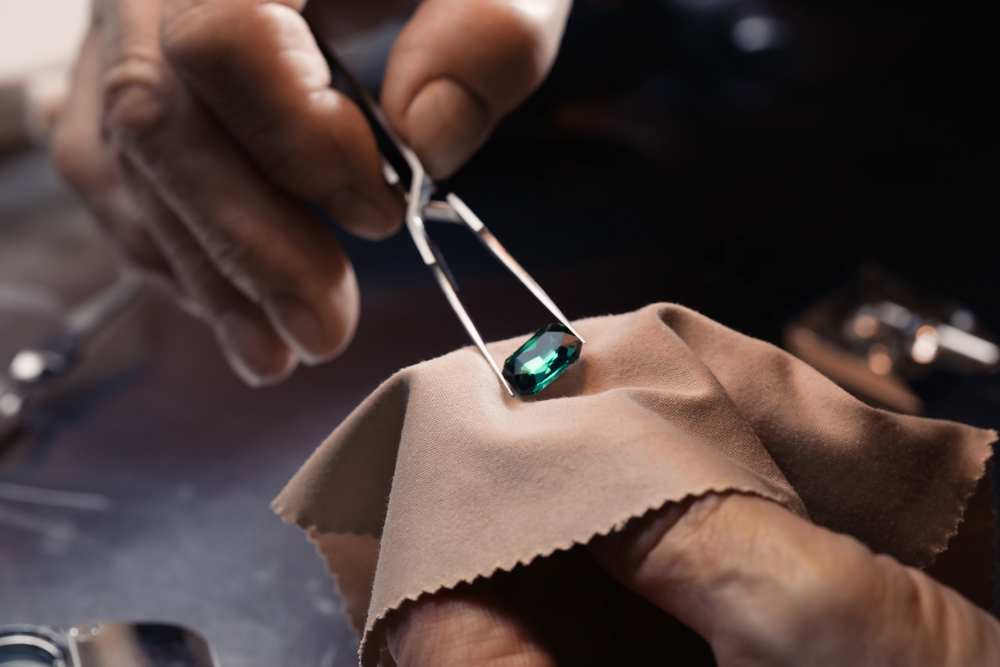
Jeweler holding round cut green gemstone with tweezers.

Hardness vs. Toughness & Stability

The hardness is only one of the factors that jewelers consider when recommending the gemstone for your unique engagement ring. Every gemstone has different properties and varying tolerances to environmental factors. When choosing which gemstone to use in engagement rings, experts look at three factors: hardness, toughness, and durability. We’ve already covered what hardness means for gemstones used in rings, so let’s talk a bit about toughness.

Toughness is determined by the strength of the atomic bonds of a particular gemstone and the way these bonds are formed. The toughness scale measures how much work is required to separate two surfaces along a specific crystallographic plane. This means that there are certain angles along which the uber-hard diamond is more vulnerable to breaking, and a solid blow along these angles can fracture it.

That’s why diamonds with thin girdles or exposed culets may be vulnerable to chipping or breaking. Therefore, diamond is not rated as the toughest gemstone; actually, jadeite jade is by far the toughest gemstone, extremely difficult to crack or break. Finally, gem stability determines how resistant the mineral is to outside factors such as temperature, chemicals, light, and humidity. So again, even though diamonds top the Mohs scale, they can be vulnerable to sudden or extreme temperature changes.

Gems like iolite, opal, or kunzite are also vulnerable to this “thermal shock,” as jewelers refer to it. Other gemstones are prone to damage due to different levels of humidity. While opals can crack due to low humidity, other gemstones like azurite can be damaged if exposed to water. Similarly, some gems like amethyst or topaz can lose color if exposed to intense light for long periods of time. Finally, some common chemicals can damage other gems: pearls can get damaged if exposed to something as mild as perfume.

How Do You Pick the Perfect Ring?

Knowing all these facts you now realize why it’s recommended to choose a durable gemstone for your engagement ring. It’s generally suggested that gemstones used in rings that will be worn daily are at least a 7 on the Mohs scale, since our hands are more likely to suffer impacts as we go through our busy days. And the higher on the scale, the better the gemstone will hold up over time. Therefore, jewelers don’t recommend using gems like amethyst or emerald in engagement rings, as these minerals can be more vulnerable to damage.

But don’t despair – if you adore a less durable gemstone, you can still have it set in your engagement ring! The expert jewelers at Leo Hamel Fine Jewelers can help you choose a setting that will offer your gemstone as much protection as possible. You’ll just want to be more careful when wearing it, take extra care when cleaning and storing it, as well as remove it for swimming or hot tubbing.

What Makes a Black Diamond?

Be spooked by the intensity of a black diamond this year and enchant your jewelry collection with a gemstone rarity. Similar to white diamonds, black diamonds are crystallized carbon and are evaluated by the 4Cs: color, carat, cut, and clarity. Along with the appearance of a glossy surface, a black diamond is higher in density than a white diamond. This means that stones of the same carat weight have different relative measurements.

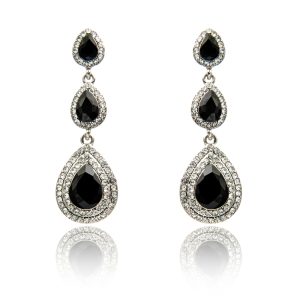
White gold drop earrings centered with black pear cut diamonds surrounded by white diamond haloes.
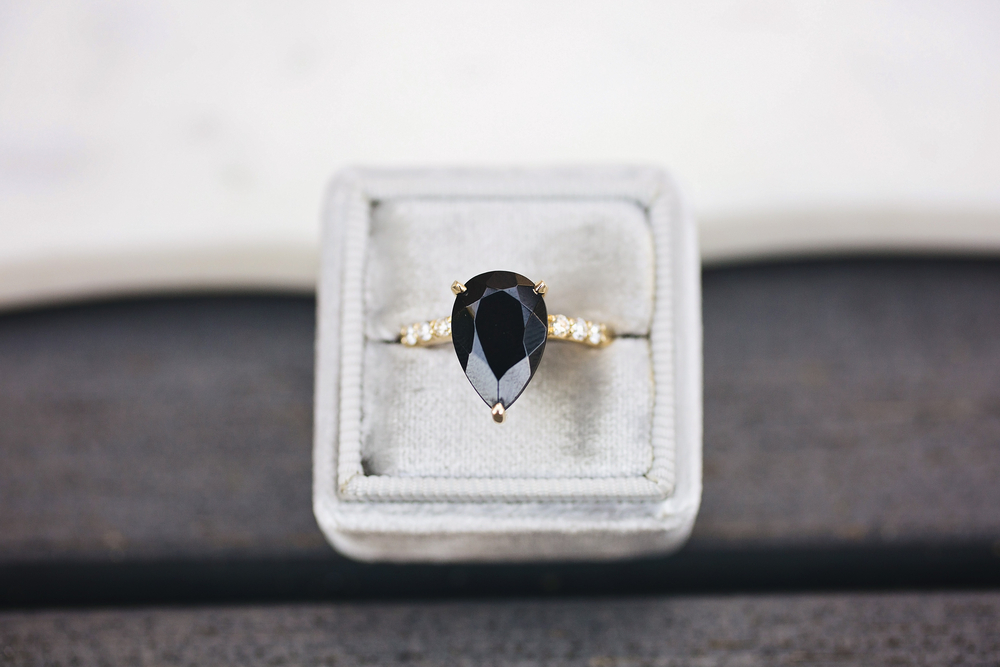
Yellow gold engagement ring centered with a pear cut black diamond and white diamonds in the band.
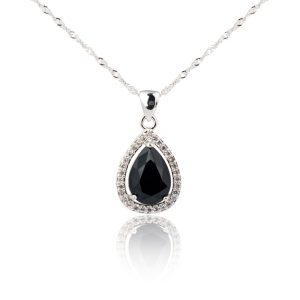
White gold pendant centered with a pear cut black diamond surrounded by a white diamond halo.

The mesmerizing dark color occurs from exposure to extremely high temperatures or dominating dark inclusions. Although shiny on the surface, black diamonds absorb light rather than refract it. They don’t exhibit the multi-colored sparkle for which white diamonds are known. Industry standard treatments ensure a uniformity of color in most black diamonds. Natural, untreated black diamonds are extremely rare and carry a remarkably hefty price tag. Looking for a truly rare gift to give in the new year?

Consider wrapping up this unique gemstone that is quickly rising in popularity. With artful conceptions from designers such as John Hardy, Sydney Evan and treasured vintage jewelry, the beauty of a black diamond can be found in a variety of pieces currently for sale in our San Diego showroom. Stop by our Old Town location soon and see what timeless pieces we have in store!

Garnet Jewelry for January

Start 2024 off with a symbol of commitment, friendship, and positive energy with the garnet gemstone.

The six families of garnets are silicate materials of different chemical composition, although they retain a similar physical appearance. Garnets range in hardness from a 6.5 to 7.5 on the Mohs scale (1 being softest and 10 being hardest). This makes them suitable for daily wear in rings and other jewelry pieces.

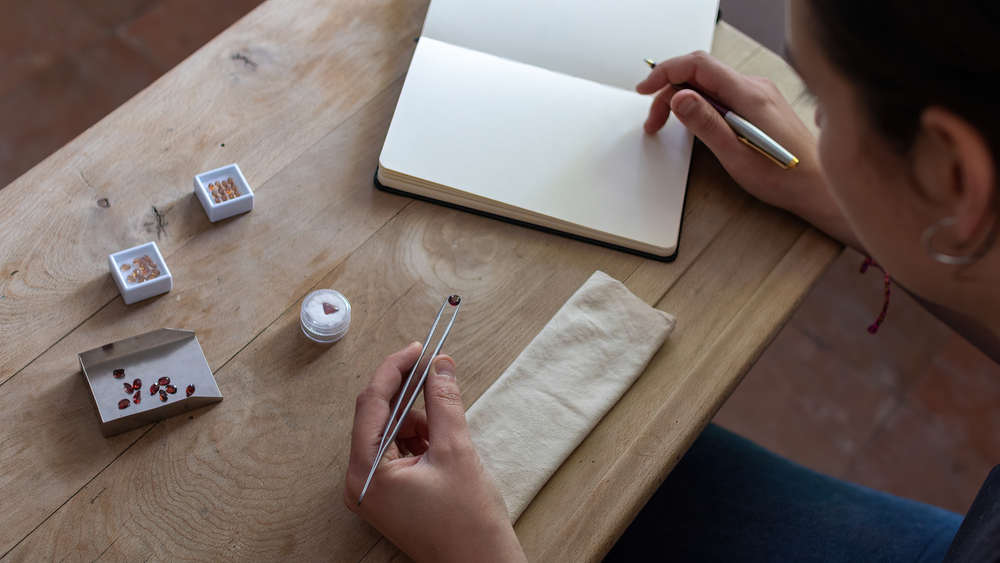
Jeweler inspecting loose garnet stones.
Yellow gold three-stone ring centered with a garnet and two diamond side-stones.

Traditionally associated with a deep red hue, garnets occur in almost every color including orange, purple, brown, and black, with the rarest being a brilliant green. These enchanting pigments are left untreated, and a garnet’s color is always natural.

Particularly favored back in the Roman Empire and used in Victorian jewelry, garnets were believed to stimulate business success and symbolize trust and friendship. The name derives from the Greek word “granatum,” meaning pomegranate seeds, because of its reflective shape and color.

Popularly identified as January’s birthstone, garnets are also gifted for the 2nd and 19th wedding anniversary. Show your January baby a commitment that will last the whole year ahead with a breathtaking piece of vintage garnet jewelry in our San Diego showroom!