
Understanding the 4Cs: How to Choose the Right Diamond for Your Budget
When shopping for a diamond, one of the first things you’ll hear about is the “Four Cs”: cut, color, clarity, and carat weight.
Many buyers assume that bigger is always better, while others focus on finding the highest color or clarity grade available. The reality is that every diamond is a balance of these characteristics, and understanding how they work together can help you make a smarter purchase.
At Leo Hamel Fine Jewelers, one of the most common questions we hear is:
“Which of the 4Cs is most important?”
The answer depends on your priorities, but understanding what each characteristic contributes to a diamond’s appearance can help you decide where your budget is best spent.””
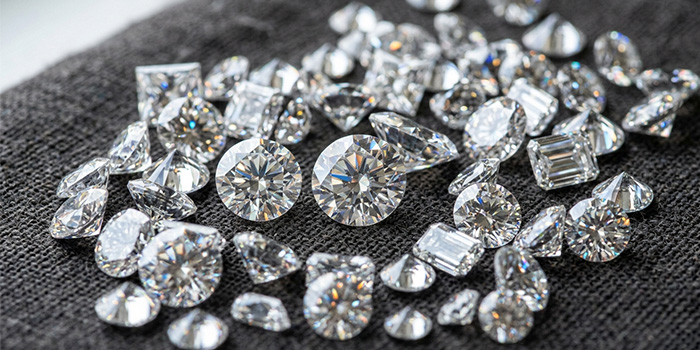
What Are the Four Cs?
The 4Cs were developed by the Gemological Institute of America as a standardized way to evaluate diamond quality.
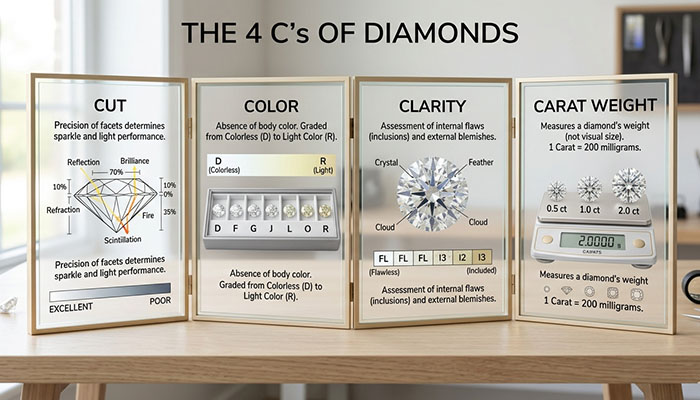
They include:
- Cut
- Color
- Clarity
- Carat Weight
Each plays a role in a diamond’s beauty, rarity, and value.
Cut: The Most Important Factor for Sparkle
If you can only choose one characteristic to prioritize, it may be cut.
Cut refers to how well a diamond’s facets interact with light. A well-cut diamond reflects light back to the viewer, creating brilliance, fire, and sparkle.
Even a diamond with excellent color and clarity can appear dull if it is poorly cut.
A well-cut diamond often:
- Appears brighter
- Looks more lively
- Can appear larger than its actual weight
- Hides minor color and clarity imperfections more effectively
For most buyers, cut has the greatest impact on what they actually see when looking at a diamond.
Color: How White Does Your Diamond Need to Be?
Diamond color measures the absence of color in a white diamond.
The grading scale ranges from D (colorless) to Z (noticeable yellow or brown tint).
Many buyers are surprised to learn that the difference between adjacent color grades is often difficult to detect without side-by-side comparison.
In many cases:
- D-F diamonds appear colorless
- G-H diamonds appear nearly colorless
- I-J diamonds can still appear white once mounted
For shoppers looking to maximize value, slightly lower color grades can often free up budget for a larger diamond or a better cut.
Clarity: Important, But Often Overemphasized
Clarity measures the presence of internal characteristics (inclusions) and external characteristics (blemishes). These are non-transparent areas inside the diamond through which light does not pass. They were formed during the diamond’s creation and usually don’t impact the strength of the stone.
Many first-time buyers assume they need an extremely high clarity grade.
In reality, most inclusions in diamonds graded SI2 and above are invisible to the naked eye.
At Leo Hamel Fine Jewelers, we often help customers identify diamonds that are “eye-clean,” meaning imperfections cannot be seen without magnification.
Rather than paying a significant premium for a near-flawless diamond, many buyers choose a slightly lower clarity grade that looks identical during everyday wear.
Carat Weight: Bigger Isn't Always Better
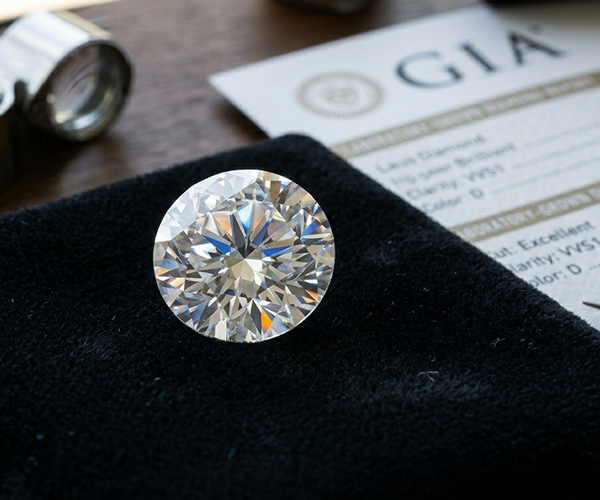
Carat refers to a diamond’s weight, not its visual size, although its apparent size is very much related to its carat weight.
While larger diamonds are rarer and typically more expensive, increasing carat weight can dramatically increase price.
For example:
- A 1.00-carat diamond often costs substantially more than a 0.90-carat diamond
- The visual difference may be difficult to notice
- The savings can sometimes be used to improve cut quality instead
Many buyers discover that a slightly smaller diamond with excellent cut appears more impressive than a larger diamond with poorer proportions.
So Which Diamond Characteristic Matters Most?
For most buyers, a practical ranking looks like this:
1. Cut
The characteristic that has the greatest impact on beauty and sparkle.
2. Carat Weight
The characteristic most people notice first because it affects overall size.
3. Color
Important, but often flexible depending on setting and personal preference.
4. Clarity
Important to a point, but many buyers can save money by selecting an eye-clean diamond rather than pursuing extremely high clarity grades.
How Lab-Grown and Natural Diamonds Compare
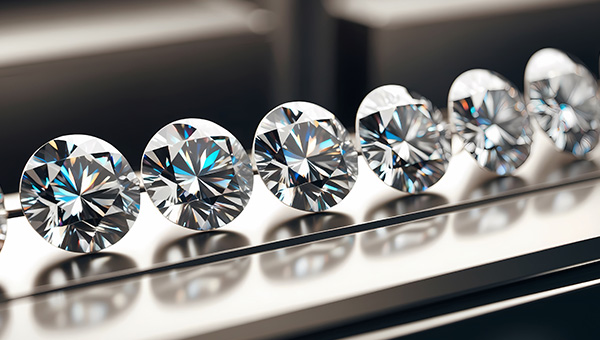
The 4Cs apply to both natural and lab-grown diamonds.
Whether a diamond was formed in the earth or grown in a laboratory, it is graded using the same standards for cut, color, clarity, and carat weight.
This allows buyers to compare natural and lab-grown diamonds using the same criteria while deciding which option best fits their goals and budget.
Why Seeing Diamonds in Person Matters
Online listings can provide specifications, but they don’t always tell the whole story.
Two diamonds with similar grades may look very different when viewed side by side.
At Leo Hamel Fine Jewelers, we help customers compare diamonds in person, explaining how cut, color, clarity, and carat weight affect appearance and value so they can make an informed decision.
The goal isn’t to sell the highest-grade diamond—it’s to help customers find the diamond that offers the best combination of beauty, quality, and value for their budget.
Frequently Asked Questions
1. Which of the 4Cs is most important?
For most buyers, cut is the most important because it has the greatest impact on sparkle and overall appearance.
2. Is a bigger diamond always better?
Not necessarily. A well-cut diamond can often look more impressive than a larger diamond with poorer proportions.
3. What is a good clarity grade for most buyers?
SI2 to VS2 diamonds often provide excellent value because they are eye-clean but cost less than higher clarity diamonds.
4. What color diamond offers the best value?
Many buyers find G-H color diamonds provide an excellent balance between appearance and cost.
5. Does the 4Cs system apply to lab-grown diamonds?
Yes. Lab-grown diamonds are graded using the same 4Cs as natural diamonds.
6. Can a diamond look bigger than its carat weight?
Yes. A well-cut diamond can appear larger because of how it reflects light.
7. Is flawless clarity worth the extra cost?
For many buyers, no. The visual difference is often impossible to see without magnification.
8. What is the difference between diamond cut and shape?
Shape refers to the outline (round, oval, emerald, etc.), while cut refers to how well the diamond interacts with light.
9. Should I prioritize cut over carat weight?
In many cases, yes. Better cut quality typically produces more sparkle and visual impact.
10. How can I compare diamonds effectively?
Viewing diamonds side by side with guidance from a knowledgeable jeweler like Leo Hamel Fine Jewelers is often the best way to understand their differences.